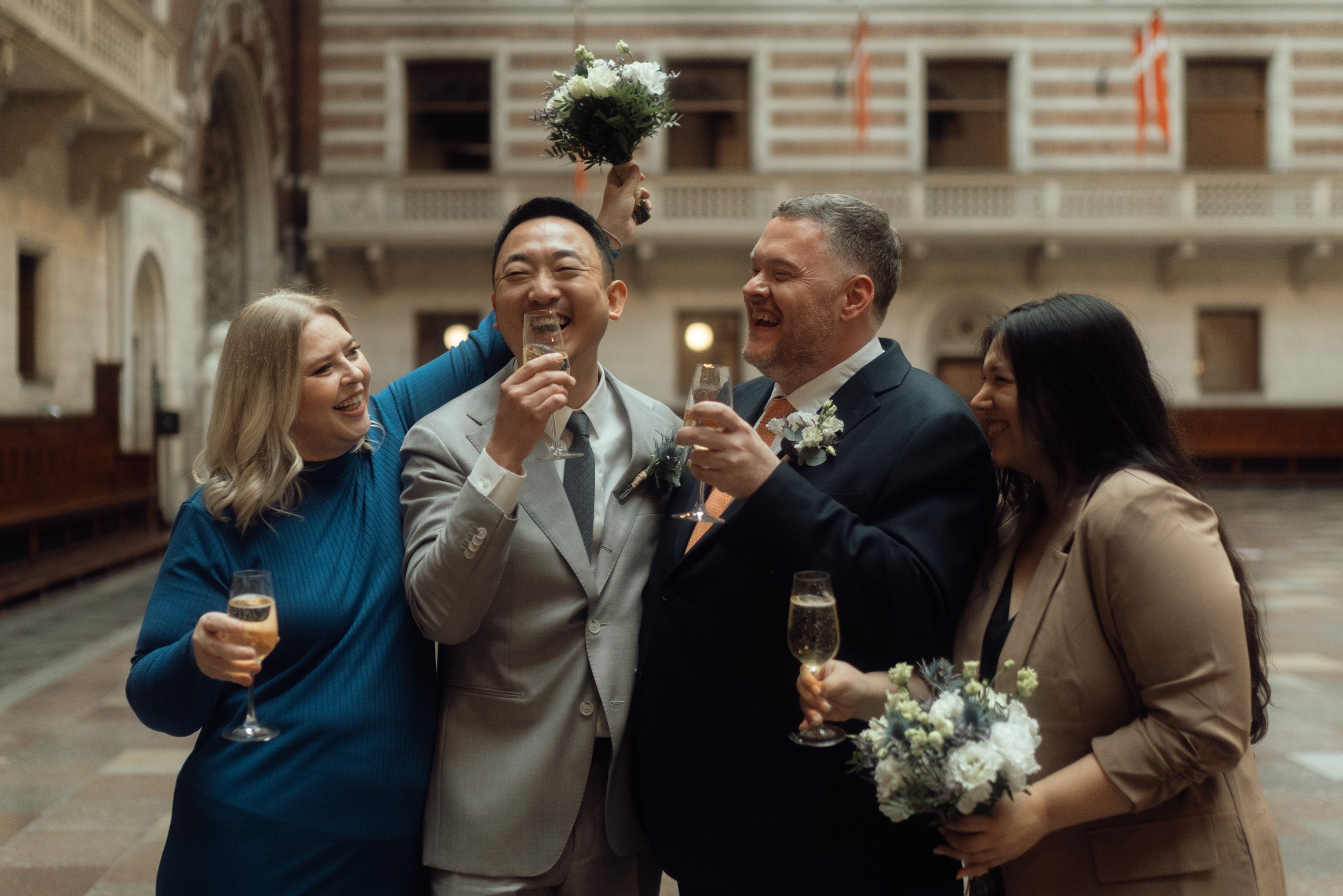
your ultimate guide to a LGBTQIA+ WEDDING in Copenhagen
UPDATED 2026
Let’s say it: the world has felt heavier lately. We thought that some human rights were settled and here we are, discussing them again. There were countries where it was safe to travel, and they’re now being bombed.
All over the world right-wing parties are rising and being racist and queerphobic is not seen as shameful anymore.
Queer life has become much harder than it used to be.
And that shows up in unexpected places, including wedding planning. For some couples, getting married at home isn't legally possible. For others it is, technically, but the atmosphere around it has shifted in ways that are hard to ignore. And for others still, it's possible and safe, but they want more than possible and safe. They want a place that doesn't make them feel like an exception.
For a lot of queer couples, the question of where to get married has become as important as the question of how.
Copenhagen has been the answer to that question for a long time. This isn't a place that has just discovered inclusivity: Denmark has been building toward it since 1933, through legislation, through culture, through the kind of steady, undramatic progress that ends up mattering more than grand gestures. When you get married here, nobody treats it as a different commitment. You just get married, like anybody else. No sense that your relationship is a special category requiring special handling.
With so much chaos globally, Copenhagen offers something rare: peace, safety, sanity. You can hold hands on the street. You can kiss in public. You can stop being alert.
Let’s see how you can make it happen.

WHAT DO YOU NEED TO GET MARRIED IN COPENHAGEN?
The administrative side is genuinely manageable, especially compared to many other European countries.
Denmark doesn't require you to establish residency, and the process is the same regardless of nationality or who you're marrying.
For most couples, the required documents are:
Valid passports or EU national IDs
Proof that you’re both legally single (Certificate of Marital Status)
Divorce papers or death certificate, if applicable
Sometimes, a birth certificate (check based on your nationality)
Unlike many other European countries (hello Germany), Denmark does not require birth certificates or evidence of single status from all couples in order to obtain documentation permitting marriage - but requirements vary by nationality, so check your specific situation in advance.
If dealing with paperwork makes your eye twitch, consider hiring a local agency that specializes in international marriages. They know exactly which documents are required for your specific nationality combination, which saves time and removes the guesswork.
How Long Does It Take?
Once your documents are submitted, the turnaround is relatively fast: most couples hear back within a few days or weeks.
The processing happens through the municipality where you plan to marry, and the registrar will confirm your date once the file is complete.
One important practical note: Copenhagen City Hall has become significantly more popular in recent years. Approximately 8,000 wedding ceremonies took place at Copenhagen City Hall last year, with more than 5,000 involving couples who weren't Danish residents. It’s almost double what the city saw five years ago, and the numbers keep rising.
Book as early as you can, particularly if you have a specific date or season in mind.

Will Your Marriage Be Recognized Back Home?
All Danish marriage certificates are fully valid under Danish law. So what happens when you return home is a different question, and the answer varies widely depending on where you're from.
Countries like the UK, Germany, Canada, and Australia generally recognize marriages performed abroad without issue. Others don't recognize same-sex marriages at all, or require additional steps to register them locally. The safest move is to contact your home country's civil registry office before you travel.
But here's something worth saying clearly, because I've seen it firsthand over years of working with international couples: for many queer people, legal recognition back home isn't the point. Over the years, I've photographed couples from Russia, from countries across the Middle East, from parts of Asia, from places where being openly queer carries real risk.
They didn't come to Copenhagen despite that, but because of it. A legally recognized marriage certificate opens doors that matter when everything else is uncertain: marital visas, the right to move together, the ability to stay together if or when leaving becomes necessary. For some couples, getting married in Denmark is a practical, forward-thinking protection. A way of keeping options open in a world that doesn't always offer many.
If that's part of your situation, it's worth speaking with a legal professional who has experience in cross-border family law, someone who can map out what your certificate actually gives you, and where.

Can You Get Married During Pride Week?
Copenhagen Pride runs for an entire week every August, and the city fully commits to it: parades, performances, parties, and a general atmosphere that makes you feel like the entire world is on your side.
If you want to get married during that week, it's absolutely possible, and it adds something to the occasion that's difficult to put into words.
Here’s the practical reality: book early, because City Hall appointments during Pride fill up fast, venues follow, and so do hotels.

Where to Get Married
City Hall is the go-to for a reason: it’s gorgeous, historic, and the staff know how to make your ceremony personal and meaningful. Appointments are available year-round, and the process is smooth even for international couples.
But if you're dreaming of something different, something outdoor, Copenhagen has you covered:
Kongens Have (The King’s Garden) – A peaceful, tree-lined royal park in the center of the city. Here you will find fountains, blooming flowers, and the beautiful Rosenborg Castle.
The Royal Library Garden – A hidden gem located between the historic building of Christiansborg Slot and the old Royal Library, perfect for intimate ceremonies.
The Opera House – Sleek, striking, and sitting right on the water. The architecture alone is enough to make your photos stand out, and the view of the city skyline is unforgettable. Plus: you have a gorgeous city garden right next to you.
Check this page to see where you can get married, other than Copenhagen City Hall.
Prefer total control over the vibe? You can book a private registrar that comes wherever you like: a rooftop bar, a boutique hotel, a cozy restaurant, your Airbnb, anywhere really.

How to Find vendors Who Get You
You want your wedding day to feel like you. That means surrounding yourself with people who respect your relationship, your identity, and your vision - no questions, no awkward vibes, no outdated assumptions.
Here’s how to find vendors who actually get it:
Consistency, not tokenism. Scroll through a vendor's full portfolio and social media presence. Queer couples should appear throughout their work, not only in a single Pride-themed post.
Language in their materials. Booking forms, contracts, and emails reveal a lot. Look for language that's flexible and affirming: forms that don't assume gender, language that doesn't presuppose what a "bride" or "groom" wants.
Direct conversation. When you reach out, ask how they've worked with LGBTQIA+ couples before. A vendor who genuinely has experience will have specifics to share. One who doesn't will be vague.
Referrals within the network. Inclusive vendors tend to refer each other. Finding one you trust is often the best route to finding the rest of your team. My list of inclusive vendors is here.
Privacy, if it matters to you. If you're coming from a country where visibility carries real risk, tell your vendors early. A photographer, for example, can keep your images completely off social media and out of any public portfolio. Your safety matters more than anyone's marketing.

Privacy and Safety
Denmark is one of the few places where your relationship isn’t politicized, questioned, or reduced to a debate. You won't be treated like an exception. You can walk in, get married, and walk out knowing you were respected every step of the way.
If you’re coming from a place where weddings mean risk, tell your vendors. And if you decide to work with me, your photos will stay private if it means more security for you.
Final Word
A wedding in Copenhagen isn’t just a romantic choice, but a political one. Denmark has been working on human rights for a long time, long before it became a destination for international couples. That long history explains why the process feels the way it does, why the staff at City Hall treat you like everyone else, why you can walk around the city after your ceremony without thinking about it.
In a time when queer lives are under threat in too many corners of the world, choosing to marry in a place that celebrates you is empowering.
Get married in Copenhagen. Not because it’s trendy, but because it’s safe, it’s real, and it’s yours. And because we need to show the world that we’re still here, proud and loud.
And that matters more than ever.
Ready to make it happen?
If you want someone behind the camera who understands what this day means, the full weight of it, and the full joy of it, I'd love to hear from you.