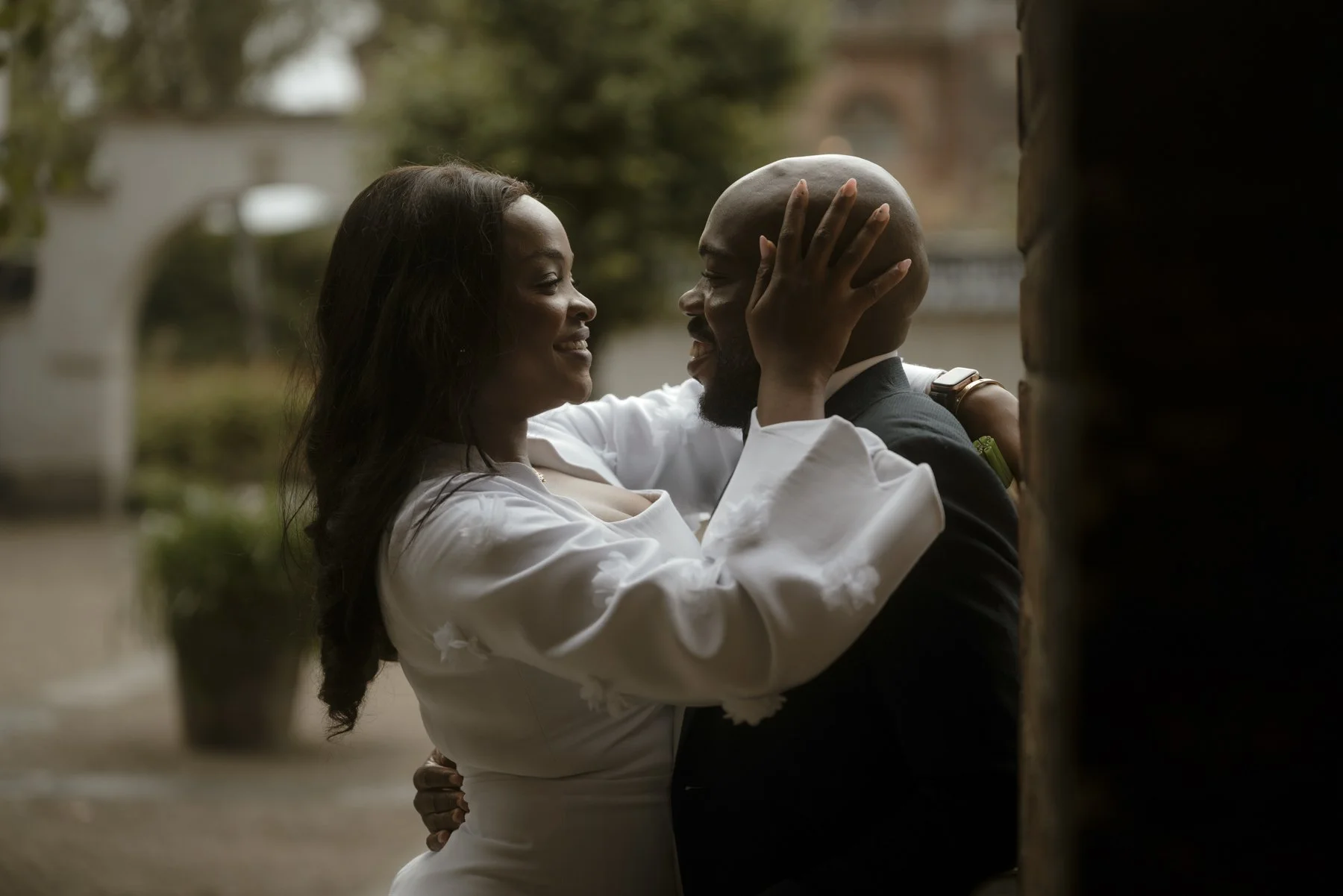
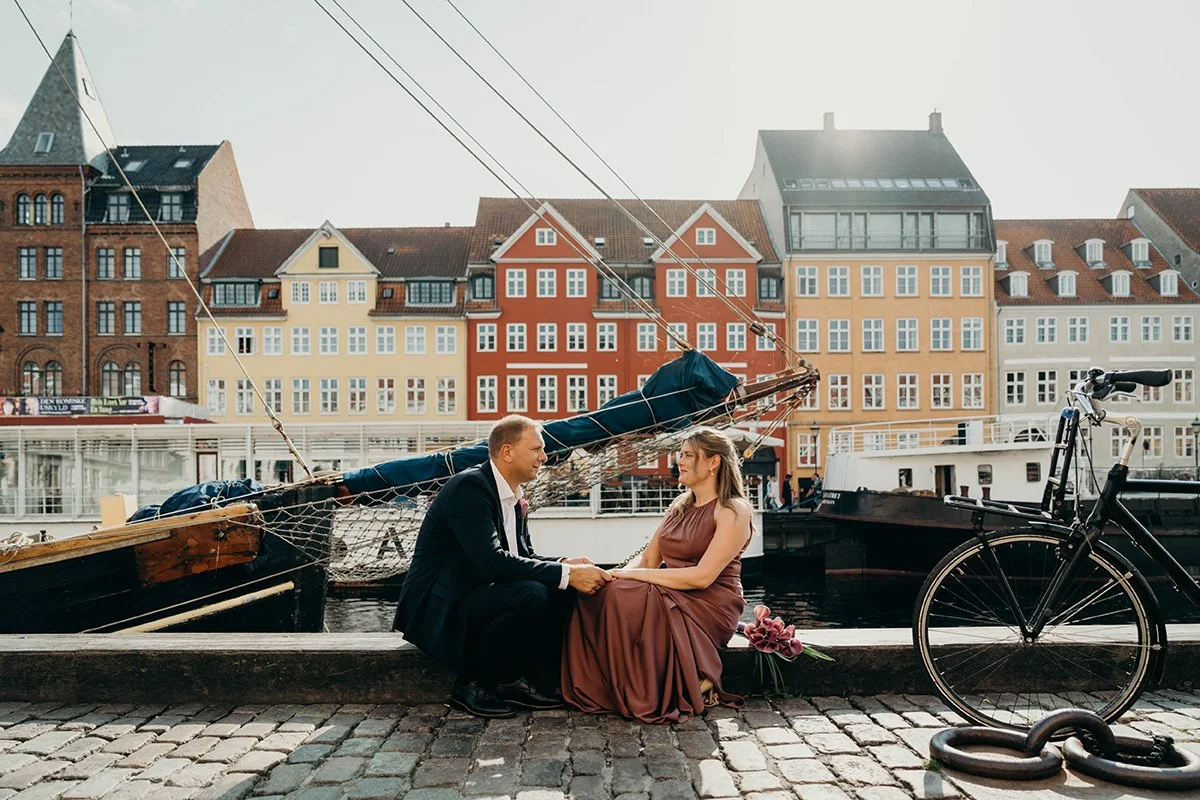
“we’re not photogenic” - the truth about feeling awkward in wedding photos
There is one sentence that comes up in almost every first email, discovery call, or quiet confession sent at the end of an inquiry form, and it always sounds some version of these:
we’re not photogenic
we don’t know what to do in front of the camera
we feel awkward and stiff and we’re scared our photos will look fake
It is said apologetically, as if being nervous in front of a camera were a personal flaw, as if there were people in the world who were born naturally elegant under a lens and everyone else had simply missed the memo.
The truth is that almost all of my couples feel exactly this way at the beginning, even the ones whose galleries you later look at and think, they look so relaxed, they look so natural, they look like themselves.
The myth of “photogenic people”
Being photogenic is not a personality trait, and it is certainly not something you are either born with or denied forever.
What we call “photogenic” is usually just what people look like when they feel safe, unjudged, unhurried, and free from the pressure of having to perform something for the camera.
The internet has done a very efficient job at convincing us that natural-looking photos require a certain kind of body, face, confidence, or extroverted personality, but in real life what they require is something much simpler and much rarer: an environment where you are not being evaluated.
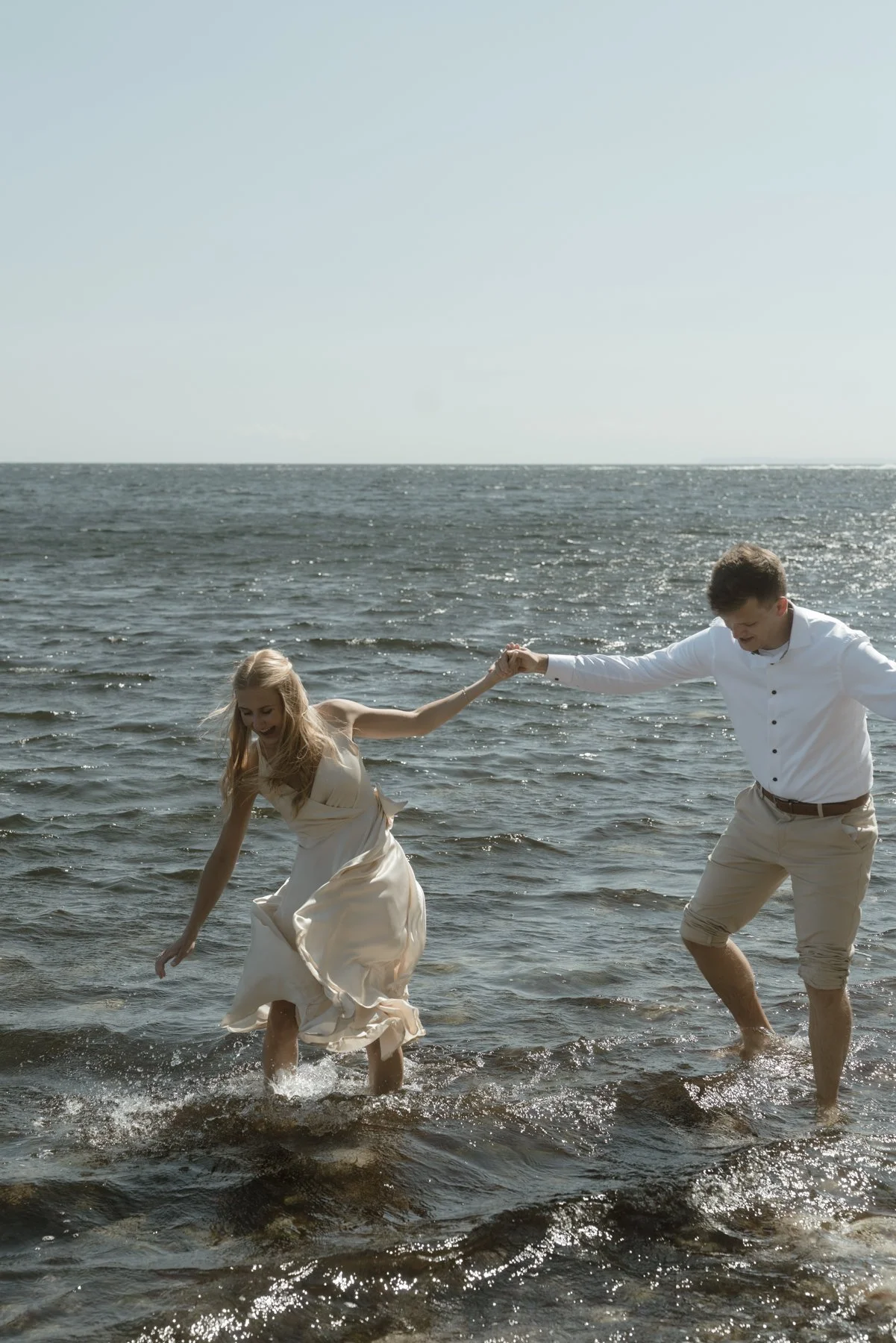
The secret behind the relaxed people you see in my photos
The people you see in my galleries did not arrive confident, trained, or ready. They arrived worried, hesitant, and convinced that they would somehow “ruin” their own photos by being themselves.
What changed was not who they are, but the space they were allowed to exist in.
When couples stop feeling watched and start feeling accompanied, something shifts: shoulders soften, breathing slows, movements become natural again, and the camera stops feeling like a test they are failing.
This is why so many couples tell me, after the session, that it was nothing like what they feared, and why their biggest surprise is often not the photos, but how easy the experience felt.
Why “just be yourselves” is not helpful
One of the most misleading phrases in photography is just be yourselves, because for people who already feel awkward, it sounds like being thrown into deep water and told to swim.
Couples are often afraid that choosing a candid photographer means being left alone to invent moments, emotions, movements, and interactions while someone silently observes them from a distance.
And that fear is valid, because vulnerability does not grow in an empty space.
But how do we create an environment where you can look good for the camera while at the same time be yourself? And within 1 hour?!
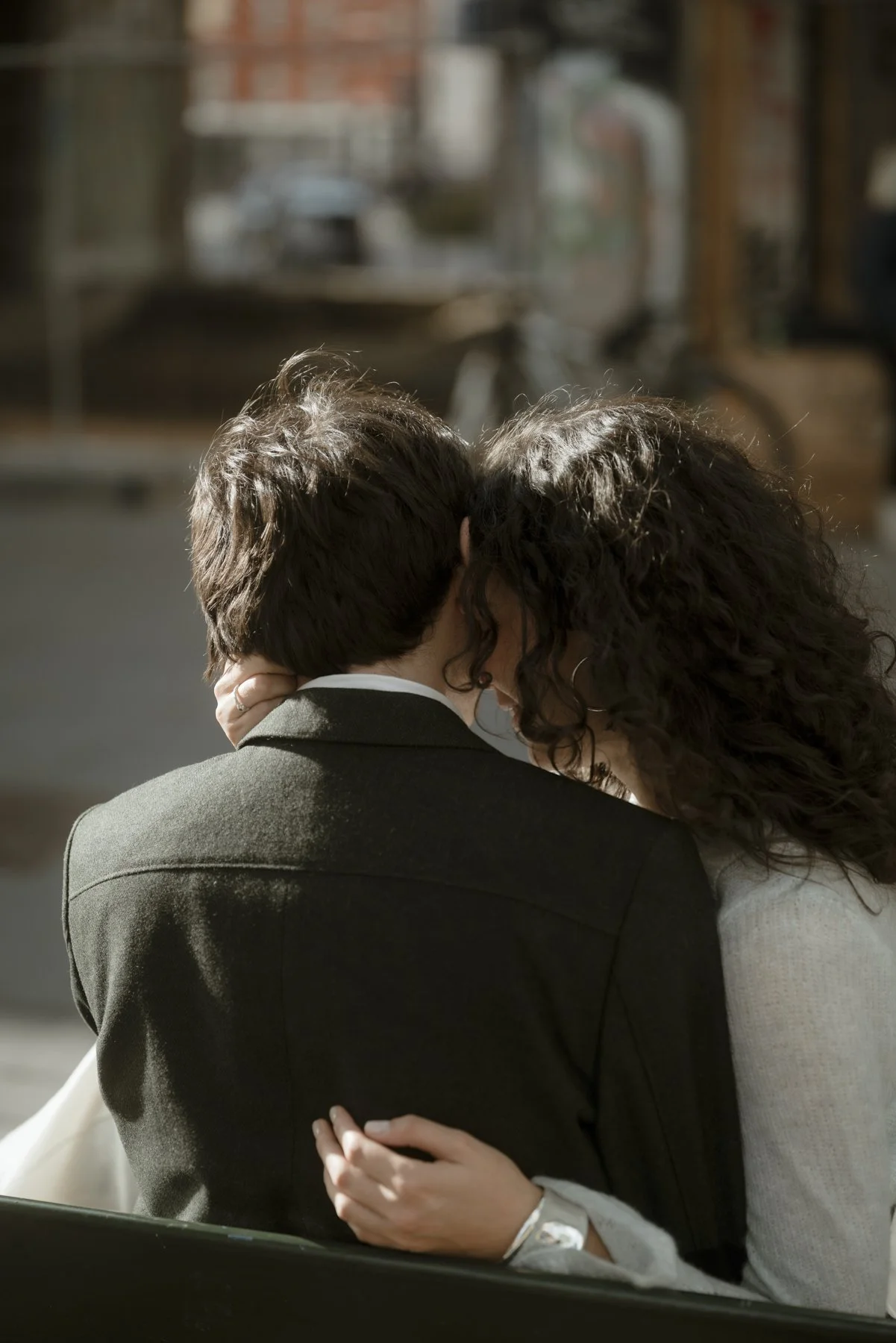
What actually happens during my sessions
Wedding photography, for me, is not about standing back and hoping something meaningful happens while people silently struggle with their nerves in front of me.
This is not a wildlife documentary, and you are not expected to instinctively know what to do just because there is a camera in the room.
My job is about gently guiding, pacing, and creating a rhythm where nervous systems can settle, where you are not rushed into connection, and where your attention can slowly move away from the camera and back toward each other.
Direction does not have to be rigid to be present, and guidance does not have to be artificial to be helpful. There is always a structure, but it is a soft one, one that leaves room for your own way of being together.
Why experience and empathy change everything
After more than ten years of photographing couples, you start learning things that have nothing to do with cameras or light.
You learn how to read discomfort, how to notice when someone is holding their breath, how to recognize when people need more space, more reassurance, more slowness, or simply permission to stop trying so hard.
Whatever you do, look for a photographer with empathy, because this is the real foundation that makes everything else possible.
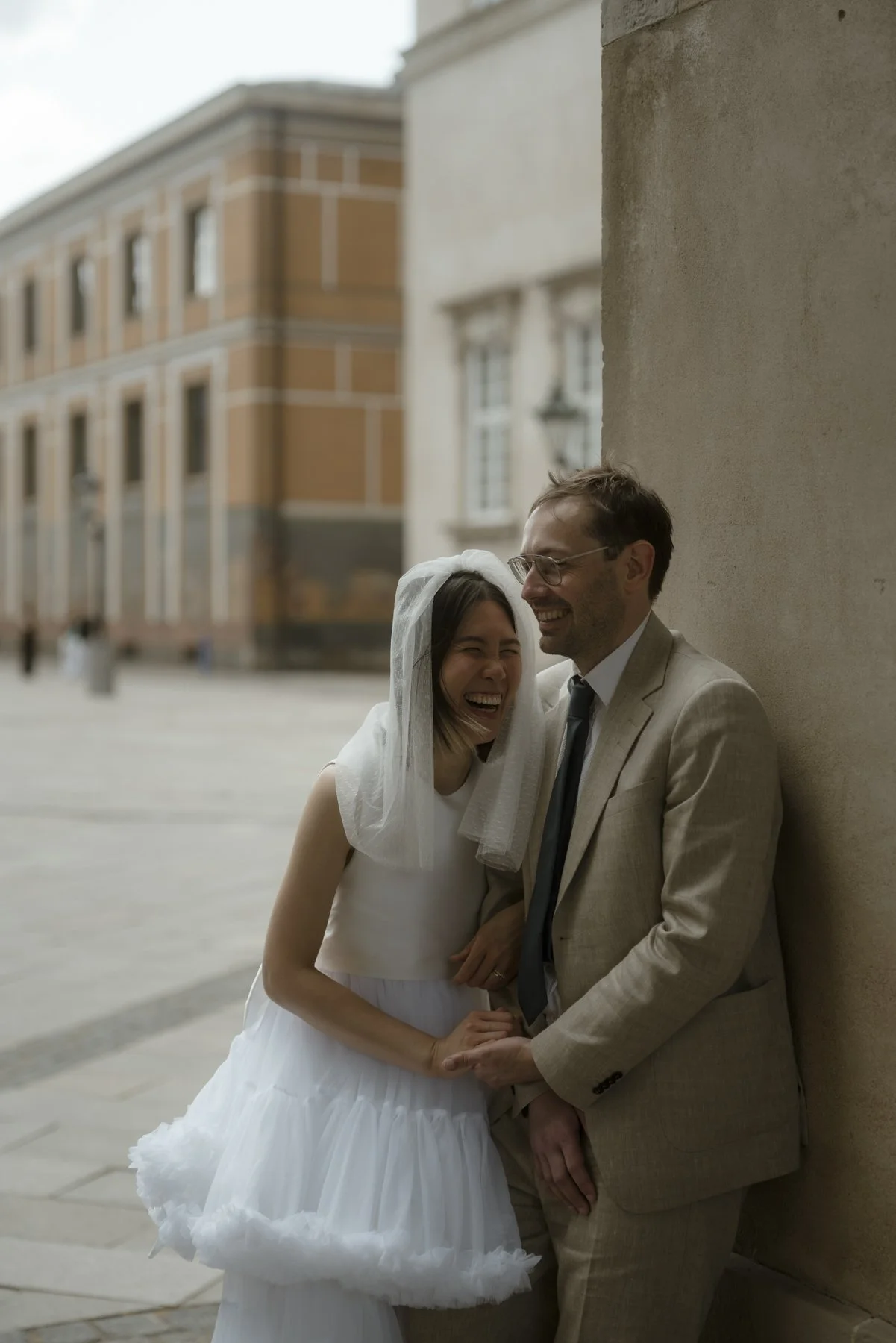
Vulnerability is not a personality, it is an environment
You are not “bad in front of the camera”. You are not broken, stiff, or incapable of being photographed.
You are simply human, and humans open up in places where they feel seen rather than measured, supported rather than directed, and safe rather than judged.
When that environment exists, vulnerability does not need to be forced, it arrives on its own.
What couples usually say afterward
What I hear most often after sessions is relief. Surprise. A sense of being understood. And very often: that was much easier than we expected. Not because they suddenly learned how to pose, but because they were finally given space to stop performing.
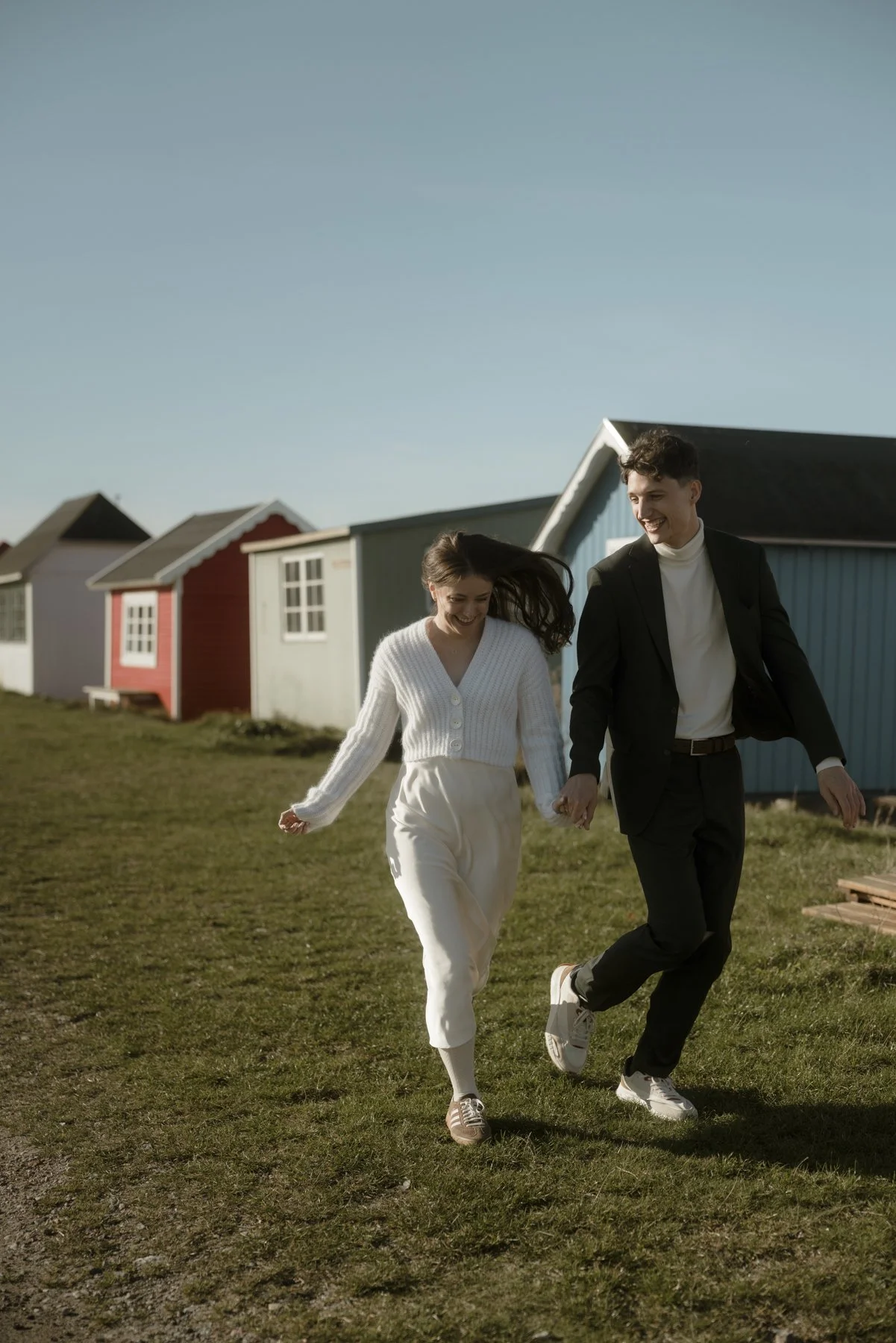
You are not the problem
If you have ever looked at photos and thought, I could never look like that, I want you to know that those people once thought the same thing.
The difference was never them. The difference was the environment they were given. And you deserve one that lets you be fully, quietly, honestly yourself, without having to prove anything to a camera.
I’m here for you
If any part of this felt familiar, it’s probably because it is. Most couples who find their way here start in the same place: unsure, self-conscious, convinced they’re “bad in photos”, and quietly hoping there might be another way to experience being photographed.
There is.
If you’re planning an intimate wedding, an elopement, or a quiet celebration in Denmark and you want your photos to feel honest, human, and unforced, you’re welcome to get in touch.
We can talk about what you’re planning, what worries you, and what you need in order to feel comfortable, without pressure, and without having to perform for a camera.